外国人眼中的“中国白”|宋元时期中国远程贸易的德化瓷在泰国南部塞丁普拉遗址的发现(二) - 憨鼠网
关键信息
- 发布时间
- 2021-12-31
- 作者
- 詹尼斯・斯达加特 翻译:孙延燕
编者按:2011年11月,由北京故宫博物院、中国古陶瓷学会、福建省文物局、德化县人民政府共同主办的“2011中国瓷都・德化窑学术研讨会”在瓷都德化举办,近百位国内外博物馆馆长、从事陶瓷文化研究的专家学者齐聚瓷都德化,以“中国白的故乡、瓷艺术的摇篮”为主题,共同研讨深厚的德化窑陶瓷文化。研讨会共提交专题论文39篇,其中不乏外国专家的作品。与会的专家学者以翔实的图文史料为佐证,从学术专业的角度对德化窑
编者按:
2011年11月,由北京故宫博物院、中国古陶瓷学会、福建省文物局、德化县人民政府共同主办的“2011中国瓷都・德化窑学术研讨会”在瓷都德化举办,近百位国内外博物馆馆长、从事陶瓷文化研究的专家学者齐聚瓷都德化,以“中国白的故乡、瓷艺术的摇篮”为主题,共同研讨深厚的德化窑陶瓷文化。
研讨会共提交专题论文39篇,其中不乏外国专家的作品。与会的专家学者以翔实的图文史料为佐证,从学术专业的角度对德化窑在国内外陶瓷文化领域的历史地位和影响做了全面深刻的阐述,是一笔难得的、丰硕的学术成果。
近期,《外国人眼中的“中国白”》栏目将再次回顾刊载该研讨会的相关论文,并对其中的论文进行翻译,为广大德化陶瓷文化研究爱好者提供学习、交流、参考。
Dehua Ceramics in Long-distance Trade in the Song- Yuan period:
excavations at Satingpra, South Thailand(二)
Janice Stargardt 翻译:孙延燕
The Satingpra Peninsula, c.7.00-7.80 N and 100.50 E, is bounded on the east by the Gulf of Thailand, a part of the South China Sea, and on the west by the great chain of Songkhla Lakes which cover an area of over 100 km, north-south, and an average of 15 km in width(Figs. 1, 3). When ships crossed to the western edge of these lakes only 40 km separated them from the Indian Ocean, whereas to sail around the southern half of the Thai-Malay Peninsula was a hazardous journey of over 2000 km. As can be seen on Fig 2, the mountain ranges that run the entire length of the peninsula are, at these latitudes, a broken chain.
东临泰国湾,位于北纬7.00-7.80度、东经100.50度的塞丁普拉半岛,是南中国海的一部分。其西临宋卡大湖群,南北面积超过100公里,平均宽度为15公里(图1,3)。当船只越过这些湖泊的西部边缘时,它们与印度洋之间只有40公里的距离。而绕过泰国-马来半岛南部航行则是一次超过2000公里的危险旅程。如图2所示,贯穿整个半岛的山脉,在这些纬度上,是一条断裂的链条。
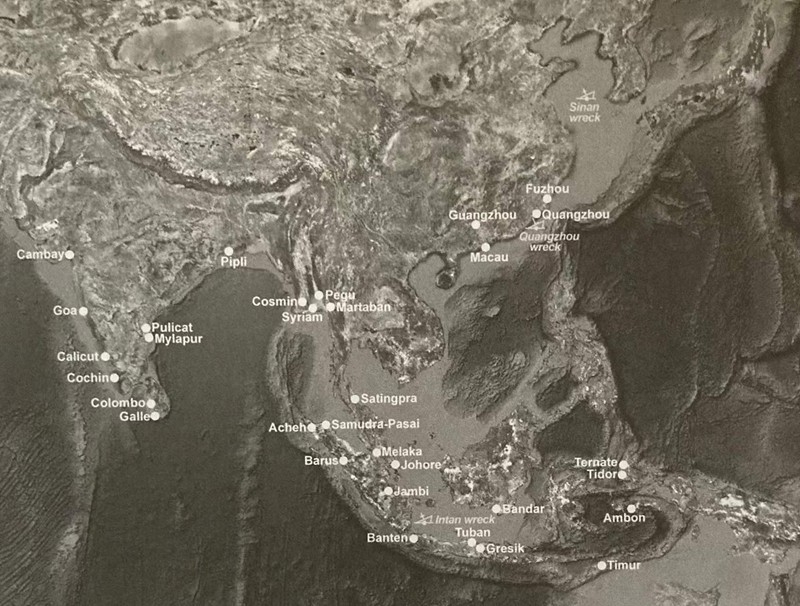
Fig.1, Regional map of Asia, with site names
图一,亚洲区域地图
Source: Google Earth
Fig.2, Gaps in the limestone ranges of Peninsular Thailand
图二,泰国半岛石灰岩山脉的山口
The breaks in the mountain ranges are caused by geological faults striking across the peninsula, which provide natural pathways. Initially such pathways were exploited by the inhabitants of the eastern plains to make contact with the mountain forest dwellers and trade with them for the precious products of the rainforest: many types and grades of incense ranging from the finest and rarest to more common varieties, as well as the commodities used in shipbuilding were harvested from this forest(Stargardt 2001 and 2005 and Table 2 below). Later, the natural pathways were used to cross from sea to sea. In c. the 6th century, a navigable canal only 4.25km long was constructed through the centre of the developing city of Satingpra, to link the Gulf of Thailand to the largest of the Songkhla Lakes(Thale Luang or Royal lake, Fig. 3). In c. the 8th century, navigable canals approx. 12 km long were constructed from the western edge of this lake to edge of the uplands. These were the Wat Wang canal and the Khao Chai Son canal(Fig 3).A short porterage route across the mountains, less th